Aircraft Turnaround Support
Optimizing time on the ground through rapid, synchronized coordination of refueling, cleaning, and catering services.
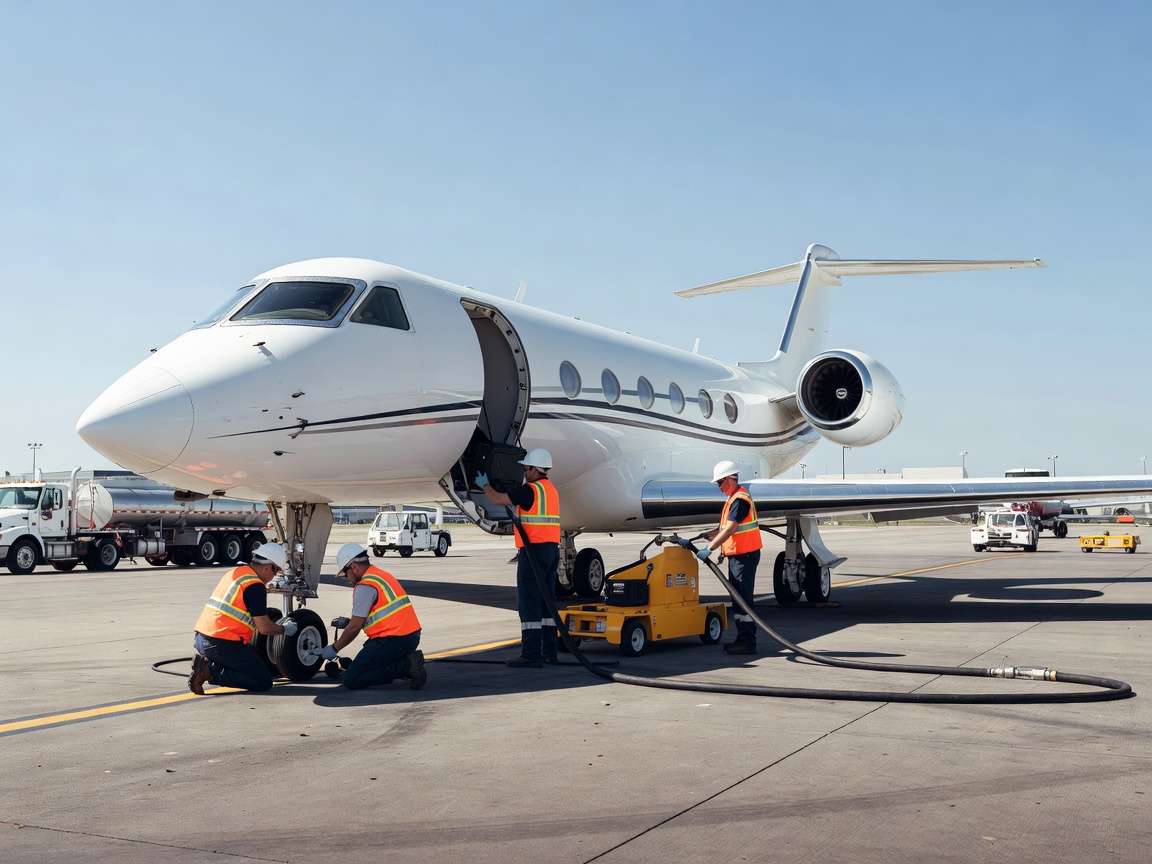
Service Overview
In business aviation, ground time is often viewed as lost time. The aircraft turnaround process—the operational window between arrival and subsequent departure—must be executed with efficiency and safety. We specialize in turnaround coordination, ensuring that all necessary services are performed concurrently where safely possible, minimizing delays and maximizing aircraft utility.
A successful quick turn requires deep knowledge of airport infrastructure, strong relationships with local fuel suppliers, and an understanding of the specific spatial requirements for different types of ground service equipment operating simultaneously around a high-value asset.
Typical Workflow
We manage the turnaround process as a highly choreographed event:
- Chocks-On Assessment: Immediate connection of ground power and initial communication with the flight crew regarding any technical defects or unscheduled service requirements.
- Passenger Disembarkation: Prioritizing the swift and discreet movement of arriving passengers away from the active ramp area.
- Service Staging: Coordinating the arrival of the fuel bowser. Fueling is typically prioritized, requiring clear safety zones.
- Cabin Replenishment: Once fueling is safely underway or completed, cabin cleaning crews and VIP catering deliveries are directed to the aircraft.
- Departure Readiness: Final baggage loading, paperwork completion, and coordination of the departure air traffic control slot (CTOT).
Operational Considerations
Turnarounds are heavily influenced by airport slot constraints and ramp layout. Many European executive airports have strict parking time limits, requiring "drop-and-go" or "tech-stop" efficiency. We monitor these constraints closely. Additionally, weather conditions such as winter operations require de-icing coordination, which must be seamlessly integrated into the turnaround timeline without jeopardizing departure slots.
Equipment & Support Categories
Our turnaround coordination covers the logistics of deploying:
- Jet A-1 fuel trucks and hydrants.
- Executive catering delivery vans with high-loader capabilities if necessary.
- Specialized interior cabin cleaning teams.
- De-icing and anti-icing equipment during winter months.
- Trash and foreign object debris (FOD) removal units.
Common Coordination Challenges
The most frequent challenge during a tight turnaround is the late arrival of third-party services, particularly catering or fuel, which can cause cascading delays. By maintaining constant communication channels with vendors and pre-confirming service times prior to the aircraft's arrival, we mitigate these risks. Another challenge is managing simultaneous operations—such as catering and fueling—which requires strict adherence to safety separation protocols to avoid hazards.
What Clients Should Prepare
For an optimal turnaround, operators should provide:
- Fuel volume requirements in advance.
- Precise catering orders and preferred delivery times.
- Details of any required technical support or minor maintenance.
- Target off-block time (TOBT) to align all services.
Need efficient turnarounds?
Speak with our logistics experts to learn how we can reduce your ground times and improve operational reliability.
Contact Operations